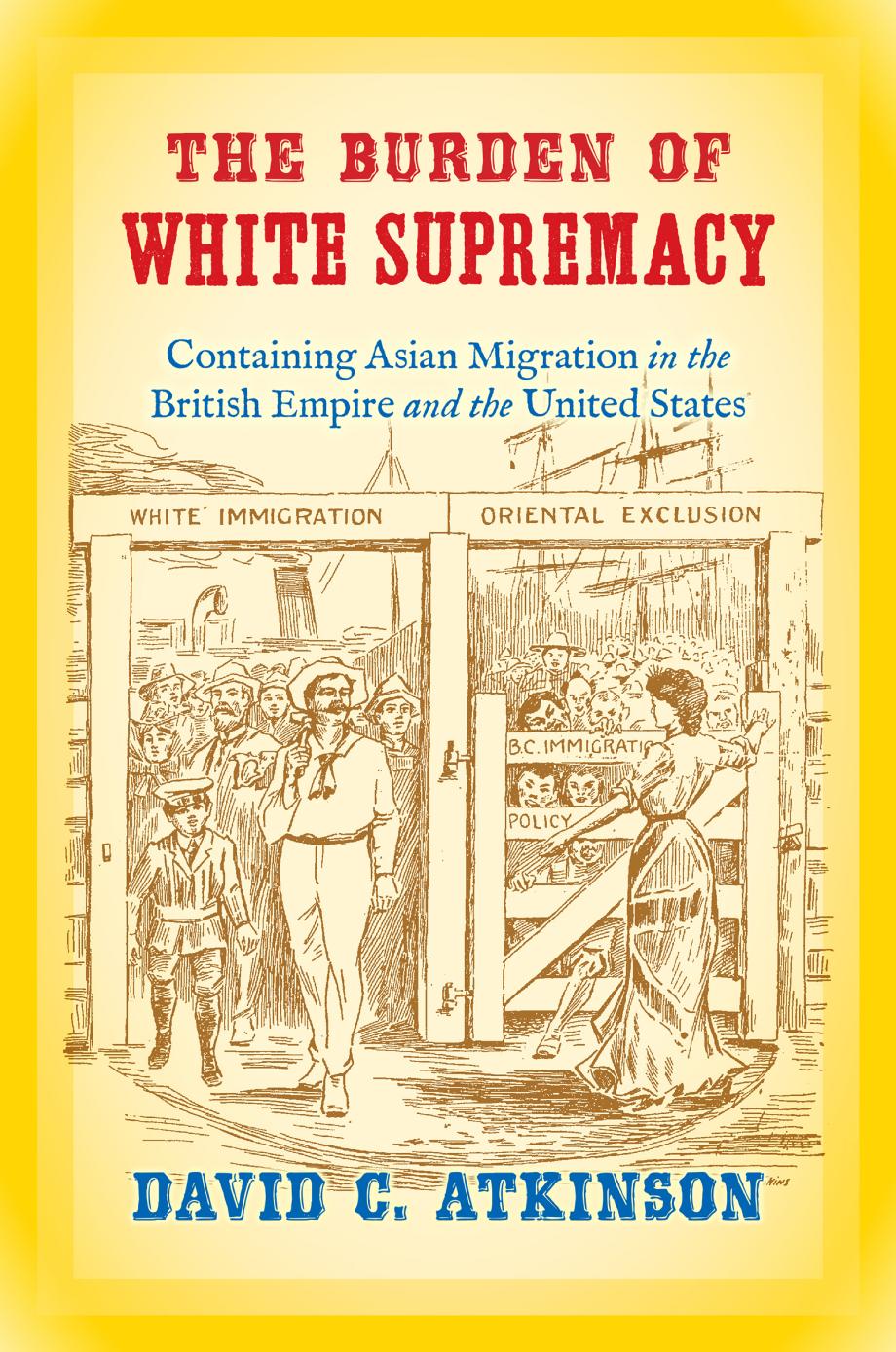
The Burden of White Supremacy by David C. Atkinson
Author:David C. Atkinson
Language: eng
Format: epub, pdf
Publisher: University of North Carolina Press
CHAPTER SIX
Making Peace with Asian Immobility
London, Paris, and Washington
The end of the First World War raised expectations of social, economic, and political change across the globe. The weakening—and in some cases the outright collapse—of the world’s most powerful empires implied the realization of long-denied national ambitions for colonized communities throughout Europe, Asia, Africa, and the Middle East. The American president’s rhetoric lent possibility to those hopes. His oratory offered relief from the carnage of the previous four years, and for a brief period his ideals seemed to presage the reform of an antiquated imperial order and the liberation of millions. Indeed Wilson’s principles of diplomatic and economic openness articulated what many throughout those regions had already concluded.1 Japanese and South Asian contributions to the allied war effort, for example, heightened opposition to the Eurocentrism of contemporary international relations and intensified Asian resentments against the discriminatory impulses of supposed white allies. This sense of anticipation nevertheless conceded to disappointment, especially for those who expected the removal of constraints on Asian labor migration. Four empires disintegrated in the wake of allied victory, but the exclusionary aspirations of many white Americans, Australians, Canadians, New Zealanders, and South Africans remained stubbornly intact.
In this chapter I elucidate how the fractious politics of Asian labor immobility ruptured the pretense of peace, reconstruction, and reform after the First World War. I specifically examine the ongoing salience of Asian immigration restrictions during three major wartime and postwar conferences, all of which played a determinative role in redefining the character and meaning of imperialism and diplomacy after the war: the 1917 and 1918 Imperial War Conferences in London, the 1919 Peace Conference in Paris, and the 1921 Naval Conference in Washington. Usually studied in isolation, taken together these meetings illustrate that South Asian, Japanese, and Chinese participation in the war did not temper colonial and American anxiety toward Asian migrants, nor did it diminish the indignation felt by Asian subjects and diplomats when confronted by white prejudice. On the contrary the imperial and international politics of Asian migration intensified in the aftermath of the Great War, compelled by the inflexibility of white economic jealousy and racism and by the increasingly confident resistance of Asian migrants and envoys. In the end, while these conferences provided an international platform for colonial and American arguments against Asian mobility—and for Asian grievances against restriction—they did not reduce the tensions engendered by those contradictory claims. Instead postwar peacemaking legitimated colonial chauvinism, disillusioned Asian hopes for reform, and inscribed discrimination, injustice, and animosity onto the mechanisms of postwar international and imperial governance.
In the war and the peacemaking that followed, then, white activists’ commitment to Asian immobility continued to beleaguer imperial and international diplomacy, and the global discord provoked by white racial and economic angst continued to fester after the armistice. The lingering acrimony of the Komagata Maru’s ill-fated challenge to Canadian restriction laws reminded British and Indian officials that colonial enthusiasm for South Asian exclusion still vexed intra-imperial relations, despite attempts over the previous two decades to subdue and conceal those tensions.
Download
The Burden of White Supremacy by David C. Atkinson.pdf
This site does not store any files on its server. We only index and link to content provided by other sites. Please contact the content providers to delete copyright contents if any and email us, we'll remove relevant links or contents immediately.
| Anthropology | Archaeology |
| Philosophy | Politics & Government |
| Social Sciences | Sociology |
| Women's Studies |
Nudge - Improving Decisions about Health, Wealth, and Happiness by Thaler Sunstein(7712)
The Fire Next Time by James Baldwin(5454)
iGen by Jean M. Twenge(5419)
Adulting by Kelly Williams Brown(4582)
The Sports Rules Book by Human Kinetics(4398)
The Hacking of the American Mind by Robert H. Lustig(4387)
The Ethical Slut by Janet W. Hardy(4263)
Captivate by Vanessa Van Edwards(3845)
Mummy Knew by Lisa James(3695)
In a Sunburned Country by Bill Bryson(3548)
The Worm at the Core by Sheldon Solomon(3493)
Ants Among Elephants by Sujatha Gidla(3472)
The 48 laws of power by Robert Greene & Joost Elffers(3305)
Suicide: A Study in Sociology by Emile Durkheim(3025)
The Slow Fix: Solve Problems, Work Smarter, and Live Better In a World Addicted to Speed by Carl Honore(3015)
The Tipping Point by Malcolm Gladwell(2931)
Humans of New York by Brandon Stanton(2876)
Get What's Yours for Medicare: Maximize Your Coverage, Minimize Your Costs by Philip Moeller(2767)
Handbook of Forensic Sociology and Psychology by Stephen J. Morewitz & Mark L. Goldstein(2709)
